
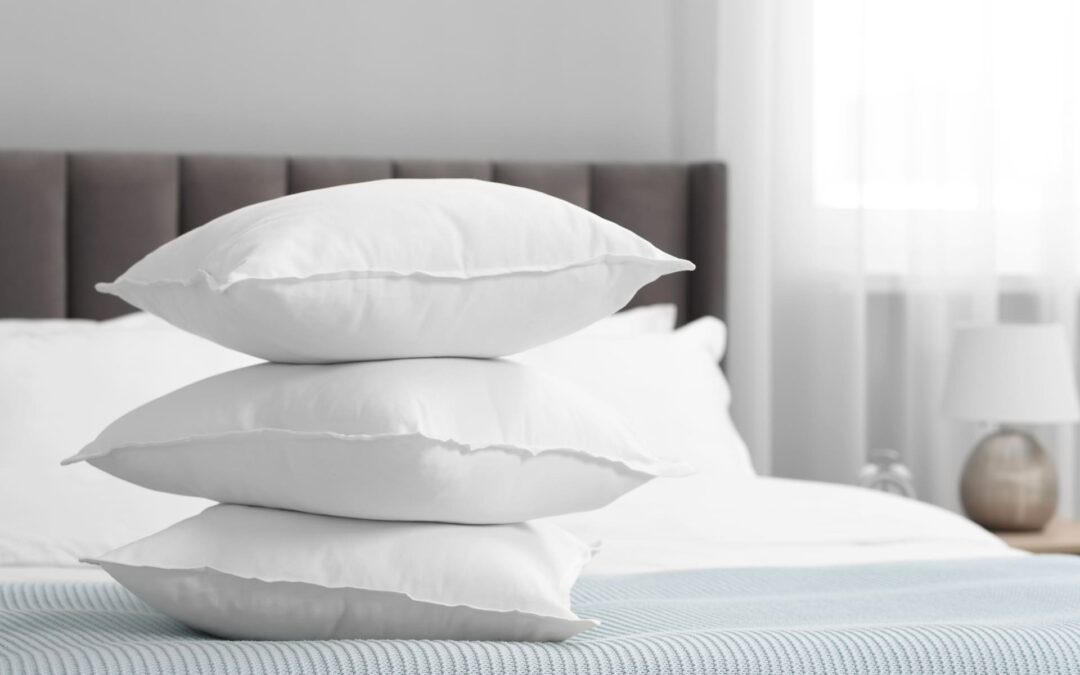
We regularly put pillowcases and bed linen in the washing machine, but the pillow itself is often overlooked. Over time, sweat, dust, skin oils, and other impurities build up inside it, which can lead to yellow stains, unpleasant odours, and the feeling that the pillow is no longer as fresh as it used to be.
However, not every pillow should be washed in the same way. A feather pillow, a synthetic pillow, and a memory foam pillow may require completely different care.
That is why, before putting a pillow in the washing machine, you should check what it is made of and what the care label says. The manufacturer’s instructions should always take priority over general washing advice for a particular material.
Check the Care Label Before Washing
Before washing, inspect the pillow and check whether it can actually be cleaned in the way you are planning.
Remove the pillowcase and, if present, any removable protective cover. Then check:
- what material the filling is made of
- whether the manufacturer allows washing the pillow in a washing machine
- what temperature it can be washed at
- whether it can be tumble dried
- whether there are any torn seams or other signs of damage.
Do not put a pillow with a torn seam in the washing machine. The filling may come out and end up in the drum, filter, or other parts of the machine.
Do not assume that every pillow with the same type of filling has identical care instructions. The outer fabric, filling, stitching, and overall construction can all affect how the pillow should be maintained.
This is especially true for memory foam, but also for feather and synthetic pillows. The care label on the specific product is always the best starting point.
The washing method primarily depends on the type of filling and the manufacturer’s instructions. This table can serve as a quick guide before moving on to the more detailed instructions.
| Pillow Type | Machine Washable | Recommended Cleaning Method | What to Pay Particular Attention To | Drying |
|---|---|---|---|---|
| Feather / down | Often yes, if the care label allows it | Gentle machine washing with a suitable detergent | Damaged seams, detergent quantity, and thorough rinsing | Dry thoroughly according to the care label; the filling must be completely dry |
| Synthetic filling | Many models can be machine washed, but always check the care label | Gentle cycle and a suitable detergent | Do not overload the drum and watch for deformation of the filling | According to the care label, either air dry or tumble dry if permitted |
| Memory foam | Usually not, unless the manufacturer explicitly allows it | Wash the cover and spot-clean the foam core according to the manufacturer’s instructions | Do not soak or machine wash unless explicitly permitted | Air dry in a well-ventilated area according to the manufacturer’s instructions; it must be completely dry before use |
The table is only a general guideline. The care label and the instructions provided by the manufacturer of your specific pillow should always take priority.
Before washing, inspect the seams once again. A small tear that may not seem serious at first can widen during the wash cycle and release feathers into the drum.
Choose the wash programme and temperature recommended by the pillow manufacturer. There is no need to automatically use the highest temperature in an attempt to get the pillow cleaner, as the outer fabric or filling may not tolerate that type of washing.
Use a suitable detergent and avoid using too much. With bulky items such as pillows, it is particularly important that the detergent is thoroughly rinsed out from deep within the filling.
If your washing machine has an extra rinse option and the pillow’s care label allows it, this can be useful if you suspect that detergent may still remain in the filling.
Washing two pillows together can help balance the load in the drum, but do not add a second pillow solely for balance if their size leaves too little room for proper movement and rinsing inside the machine.
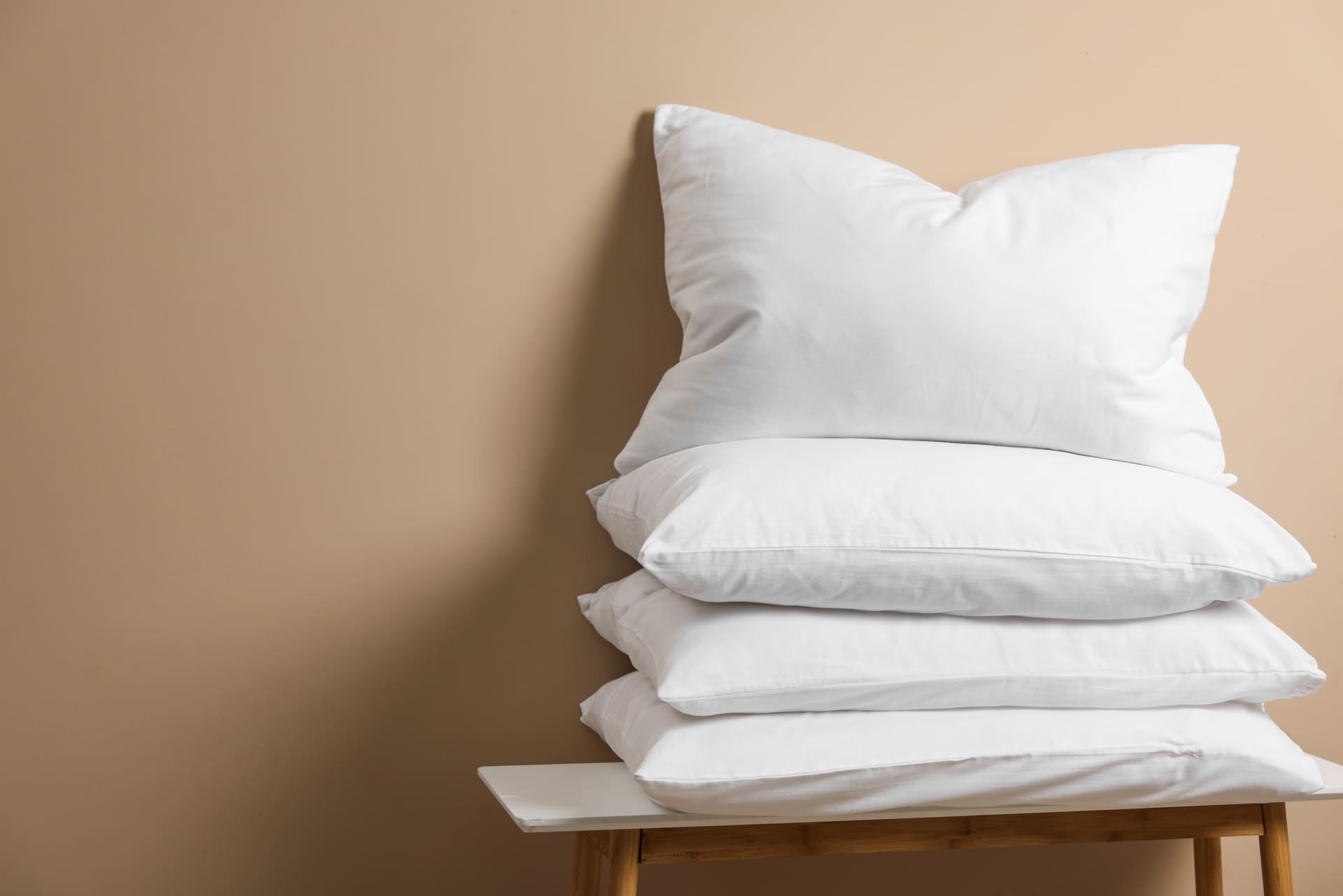
How to Wash a Synthetic Pillow
If the care label allows machine washing of a synthetic pillow, first remove the cover if it is detachable, check the seams, and choose the programme recommended by the manufacturer.
A gentler cycle can help reduce mechanical stress on the filling. The water temperature and spin settings should also be adjusted according to the care instructions for the specific pillow.
Do not overload the washing machine. A pillow absorbs a large amount of water during washing and needs enough space for the water and detergent to move through the filling properly.
After washing, check whether the filling is evenly distributed. If any clumps have formed, gently separate them by hand before and during drying.
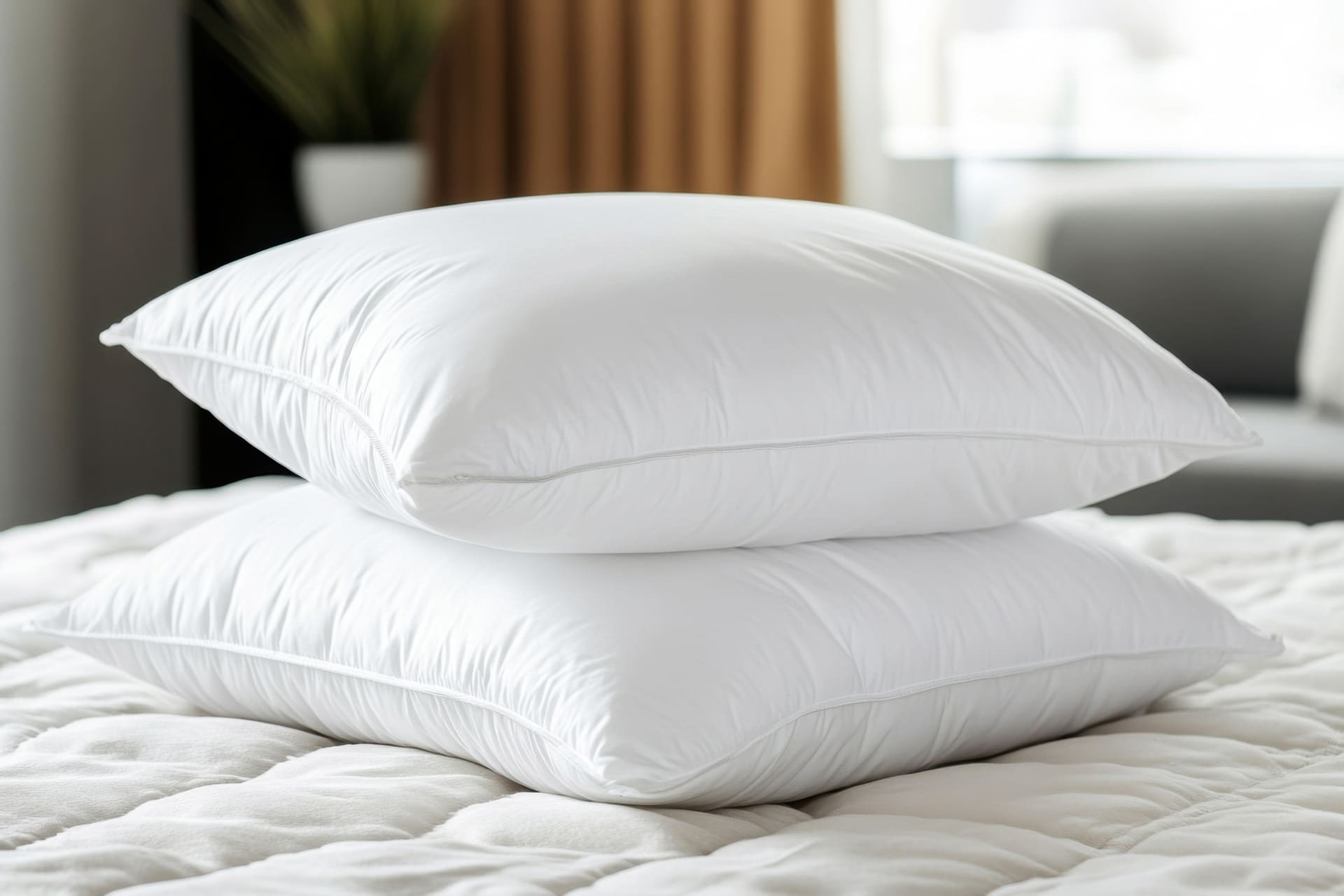
How to Clean a Memory Foam Pillow
The correct cleaning method can vary significantly from one product to another. With some pillows, only the removable cover can be washed, while specially designed models may allow a different type of care if permitted by the manufacturer.
If the manufacturer does not allow washing the foam core:
- remove and wash the detachable cover according to its care label
- remove dust from the surface according to the manufacturer’s recommendations
- spot-clean small stains only if this cleaning method is permitted
- leave the pillow in a well-ventilated area until any remaining moisture has completely evaporated.
If the care label explicitly allows the entire pillow to be washed, follow the manufacturer’s specific instructions rather than relying on general advice for memory foam.
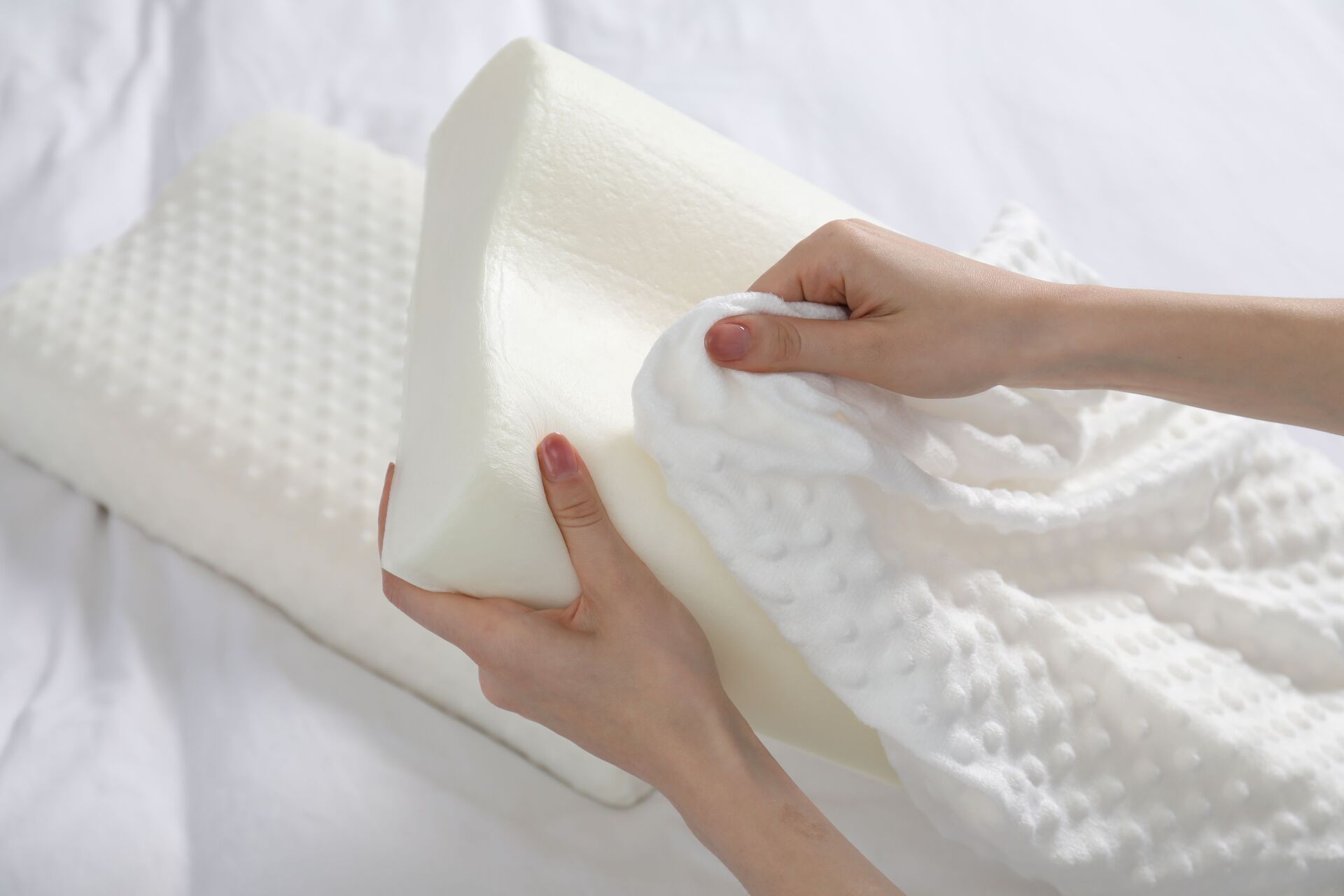
How to Dry a Pillow Properly
A thick pillow may feel dry to the touch while the filling in the centre is still damp. Prolonged moisture can lead to unpleasant odours, clumping of the filling, and conditions that encourage mould growth.
That is why you should not check only the surface after washing. Press the pillow in several places, especially in the centre. If it feels cool and damp, if you notice compacted clumps, or if there is a musty smell, the pillow is not yet ready to use.
Drying a Feather Pillow
If the manufacturer allows tumble drying, use the setting specified on the care label. Some feather pillows can be dried gently at a lower temperature.
Remove the pillow from the dryer from time to time, shake it, and separate any clumped feathers by hand.
If suitable according to the manufacturer’s instructions, dryer balls can help break up clumps and restore volume to the filling.
Do not judge dryness by the number of drying cycles. The most important thing is that the entire filling is completely dry.
Drying a Synthetic Pillow
Dry a synthetic pillow according to its care label. Some models can be tumble dried at a low temperature, while others are better air dried.
When air drying, position the pillow so that air can circulate around it and turn it occasionally. If the filling has clumped, gently fluff it by hand.
A dry surface does not mean that the pillow is dry in the centre as well.
Drying Memory Foam
For memory foam, follow the instructions provided by the specific manufacturer.
If you have cleaned only the surface, leave the pillow in a well-ventilated area and do not use it until the treated area is completely dry.
Do not automatically put it in the tumble dryer or expose it to high heat unless the manufacturer has explicitly approved that drying method.
It is important to know what the outer material and filling are made of and which cleaning agents they can tolerate. Do not rub the stain aggressively, especially on delicate outer fabrics or foam pillows.
If you do not know what caused the stain or which product is safe to use, take a look at our guide on how to treat different types of stains.

When Is It Time to Wash a Pillow, and When Should You Replace It?
Yellow stains, built-up dirt, or an unpleasant odour may be signs that it is time to clean the pillow, provided that the manufacturer allows washing.
However, not every old pillow can be restored to good condition simply by washing it.
Consider replacing the pillow if:
- it has permanently lost its shape
- the filling is uneven or heavily clumped
- it no longer returns to its original shape after fluffing
- the material or seams are visibly damaged
- an unpleasant odour remains even after proper cleaning and thorough drying
- the pillow no longer provides adequate support
- the foam is breaking down, crumbling, or permanently deformed.
How long a pillow lasts depends on the material, quality of construction, how it is used, and how it is maintained, so there is no single universal number of years after which every pillow should be replaced.
Is the Pillow Too Large for the Washing Machine? Don’t Force It In
The same applies to large decorative pillows, sofa cushions, and other bulky items.
If you do not have a washing machine large enough, are unsure whether a particular material can be washed at home, or simply do not want to risk damaging it, you can contact the iWash-uWash laundry service and check which cleaning method is suitable for your pillow.
With delicate or unknown fillings, it is sometimes better to check the correct care method first rather than trying to rescue a deformed pillow after using the wrong wash cycle.